
Twilight Saga: Film series
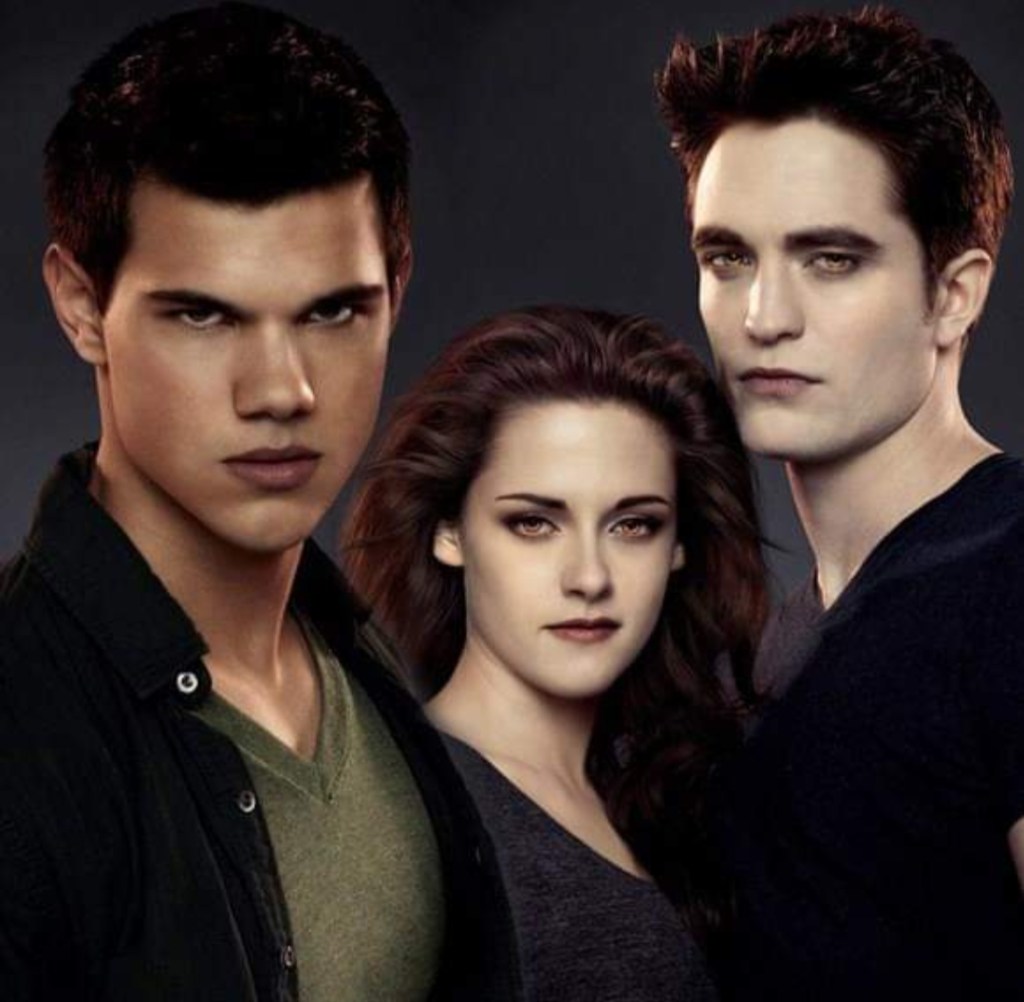
The Twilight Saga is a series of five romance fantasy films from Summit Entertainment based on the four novels by American author Stephenie Meyer. The films star Kristen Stewart, Robert Pattinson, and Taylor Lautner. The series has grossed over $3.3 billion in worldwide receipts. The first installment, Twilight, was released on November 21, 2008.[1] The second installment, New Moon, followed on November 20, 2009, breaking box office records as the biggest midnight screening and opening day in history, grossing an estimated $72.7 million.[2] The third installment, Eclipse, was released on June 30, 2010,[3] and was the first Twilight film to be released in IMAX.[4]
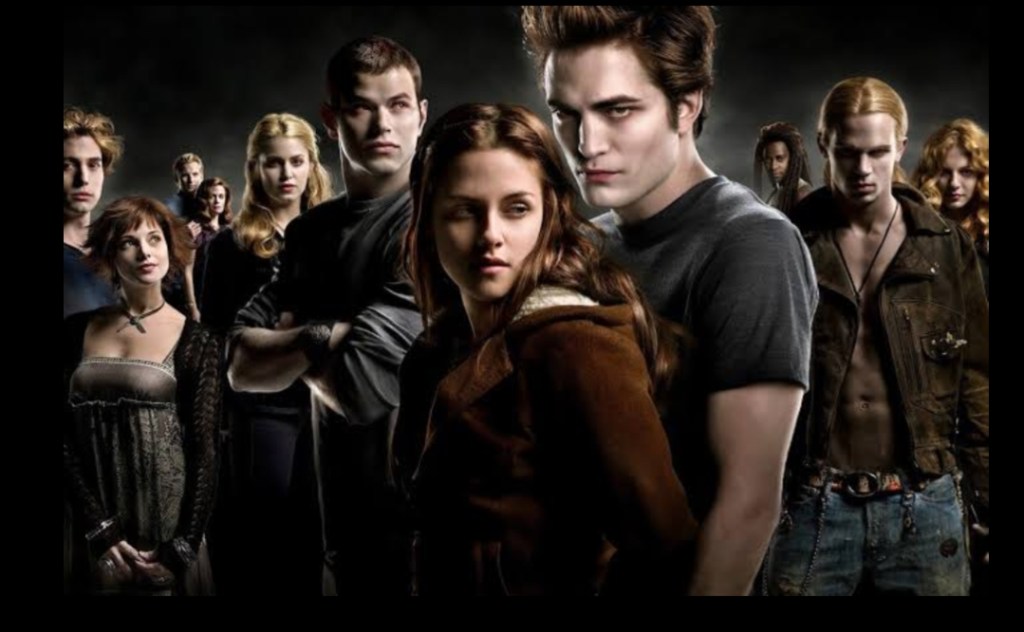
The series had been in development since 2004 at Paramount Pictures, during which time a screen adaptation of Twilight that differed significantly from the novel was written.[5][6] Three years later, Summit Entertainment acquired the rights to the film. After Twilight grossed $35.7 million on its opening day, Summit Entertainment announced they would begin production on New Moon; they had acquired the rights to the remaining novels earlier that same month. A two-part adaptation of Breaking Dawn began shooting in November 2010 with release dates of November 18, 2011, and November 16, 2012, respectively.
| The Twilight Saga | |
|---|---|
| Directed by | Catherine Hardwicke (1)Chris Weitz (2)David Slade (3)Bill Condon (4–5) |
| Produced by | Wyck Godfrey (1–5)Mark Morgan (1)Greg Mooradian (1)Karen Rosenfelt (2–5)Stephenie Meyer (4–5) |
| Screenplay by | Melissa Rosenberg (1–5) |
| Based on | Twilight series by Stephenie Meyer |
| Starring | Kristen StewartRobert PattinsonTaylor LautnerAshley GreeneRachelle LefevreBilly BurkePeter FacinelliElizabeth ReaserNikki ReedKellan LutzJackson RathboneAnna KendrickBryce Dallas HowardMichael SheenDakota FanningMackenzie FoyBronson Pelletier |
| Music by | Carter Burwell (1, 4–5)Alexandre Desplat (2)Howard Shore (3) |
| Cinematography | Elliot Davis (1)Javier Aguirresarobe (2–3)Guillermo Navarro (4–5) |
| Edited by | Nancy Richardson (1, 3) Peter Lambert (2) Art Jones (3) Virginia Katz (4–5) Ian Slater (5) |
| Production company | Temple Hill Entertainment (1–5) Maverick Films (1, 3) Imprint Entertainment (1–3) Sunswept Entertainment (2–5) |
| Distributed by | Summit Entertainment (1–5) |
| Release date | 2008–2012 |
| Running time | 607 minutes (1–5, combined theatrical cuts) 634 minutes (1–5, combined extended editions) |
| Country | United States |
| Language | English |
| Budget | Total (5 films): $385 million |
| Box office | Total (5 films): $3.346 billion |
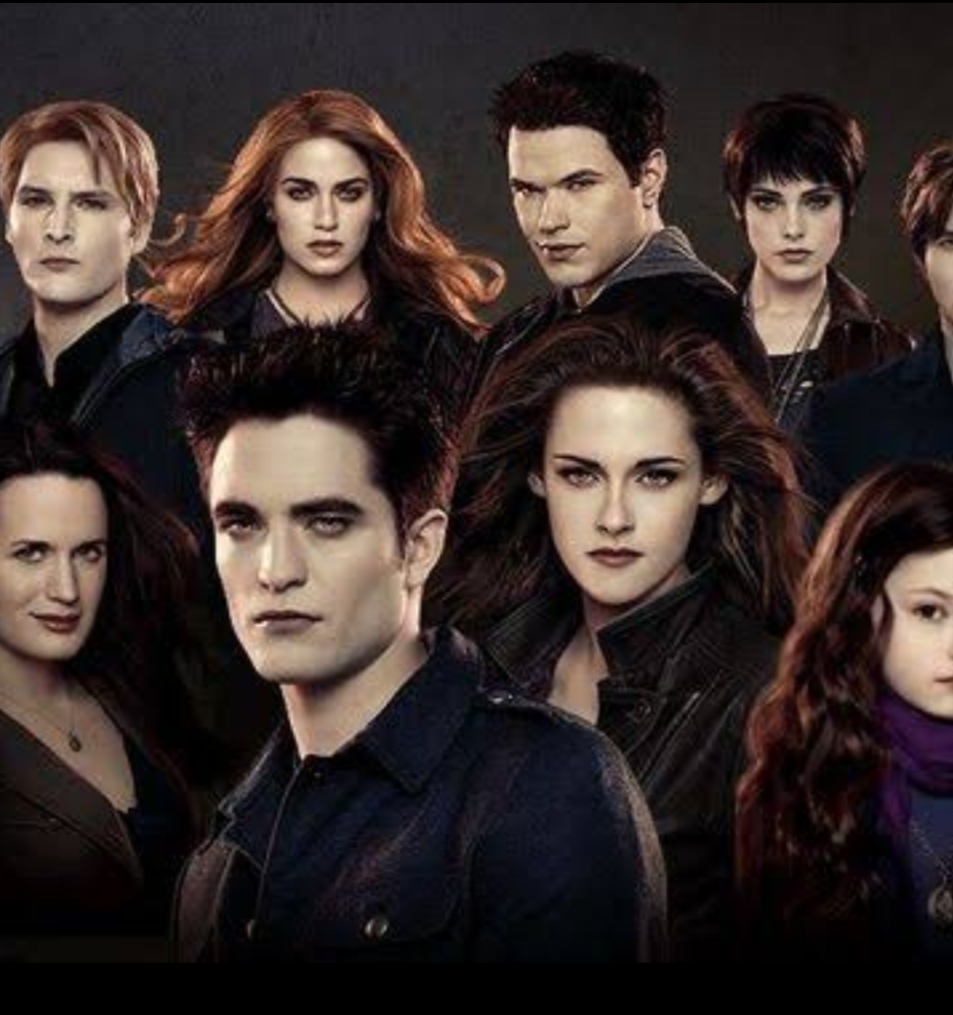
Ten years of Twilight: the extraordinary feminist legacy of the panned vampire saga
“I don’t have the strength to stay away from you any more,” says Edward Cullen to Bella Swan in the first Twilight movie. “You’re like my own personal brand of heroin.”
Thus began the unforeseen addiction of millions of human teenagers to the five-film vampire saga, which took $3.3bn (£2.56bn) worldwide, became a cultural phenomenon, and altered the future of female-led cinema for ever.
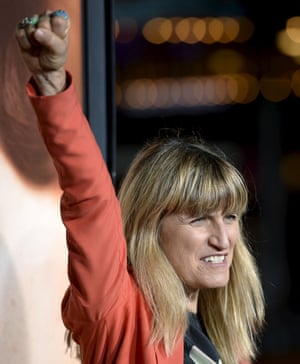
Ten years ago this month, when Twilight premiered, no one was sure whether the success of Stephenie Meyer’s young adult novels would transfer to the screen. The saturnine lead actors – lip-biting human Kristen Stewart and neck-biting vampire Robert Pattinson – were almost unknown. Director Catherine Hardwicke had a 44-day shoot and a scrimp-and-see $37m budget compared with the going rate of $200m for such CGI-fantasy-action movies.
At first glance, the story seemed ridiculous: Dracula for ditzes. Stroppy 17-year-old Bella arrives in the town of Forks in the Pacific Northwest to stay with her divorced father. At school she meets the pale, distinguished, distant Edward, who is poleaxed by bloodlust for her. (There’s a hilarious scene in which Bella sniffs her own armpit in the school lab, because her science partner Edward seems so repelled. Of course, he’s just trying to control his vampiric hunger.) Edward keeps saving Bella with his supernatural powers and they fall in love, but he must hold back in case cuddles turn to canapés. Plus, their love match is opposed by local werewolves, vampires and parents. What can possibly go wrong?
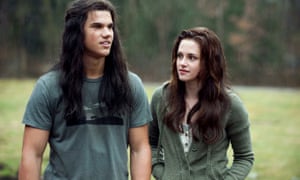
Of course, the later films became all about who would be the best and most self-sacrificial protector of Bella – Edward or the werewolf Jacob Black played by the increasingly muscled Taylor Lautner. Publicity fanned the flames of Team Edward v Team Jacob, while Bella was buffeted between the two.
But Bella always had a streak of determination, and the strange power of being able to close her mind to Edward’s thought-reading. In Breaking Dawn I, she courageously handles the gruesome problems of giving birth to a hybrid human-vampire baby, but by Breaking Dawn II, she takes on vampire shape herself, and arm-wrestles the rest of the Cullen coven into submission, just after she has chased a mountain lion and sunk her teeth into its jugular. In the end, Bella is active and empowered, a leader in battle, and the Twi-hards loved it.
Hardwicke quietly slipped some of her own politics into the first film, too, particularly when it came to casting a few actors or colour, who were not in the books, which depicted all vampires with pale, white, glittering skin. (The werewolves of the Quileute Tribe were mostly Native American.) Hardwicke tried to encourage Meyer to cast Alice Cullen as Japanese, to no avail, but she did persuade the author that there could be some diversity among the school pupils and that Kenyan-American actor Edi Gathegi would play the vampire Laurent.
Writing this feature brought back fond and ridiculous memories of watching the whole saga unfold as a critic, and taking my daughter, who was 10 when the first film debuted, and my son, then 13, through screaming, palpitating fans in Leicester Square to later premieres. I remember once being so deep in a sea of hormonal R-Patz-aroused girls that I got lost and had to aim for Mark Kermode’s quiff bobbing above the crowd to reach the cinema entrance. (Kermode always understood the popular Twilight phenomenon, while others sneered.)
This week, I speed-watched all five Twilight films on Netflix one evening. My son came by and noted that he had read all the books, and that the vampire wars were a precursor to his fondness for Game of Thrones, so there was a male demographic in the audience, somewhere. My daughter sent me the parodic “Edward and Bella – a bad lip reading of Twilight”, which I thoroughly recommend. It has 39 million views on YouTube.
A second viewing of the films reveals that R-Patz and K-Stew are as electric as ever in this, the world’s longest staring-and-kissing sequence. But some of the other elements are totally weird.
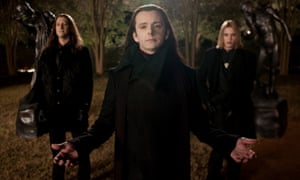
There’s Michael Sheen just chewing the scenery as Aro the mind-reading Volturi vampire – or is it Tony Blair? There’s the disturbing business of Jacob the werewolf “imprinting” on Renesmee the vampire-human baby and planning to become her lover when she is fully grown. There’s the sippy cup of blood with a straw when Bella gets those pregnancy cravings. There’s the eternal youth and immortality bestowed by vampirism, so why do all the actors look like they have been Botoxed and lathered in clown paint? Worse still, there’s a hidden anti-vegan message when Edward explains to Bella that his family are “vegetarian vampires” and only drink the blood of animals. “It’s like a human on tofu – keeps you strong but never satisfied.” Finally, it’s worth remembering that Fifty Shades of Grey began as Twilight fan fiction.
Yet, overall, I think Twilight’s legacy is a positive one, for young readers, for Twi-hard cinephiles, for the future of female-led and directed blockbusters. I’ll leave the last word to K-Stew in Interview magazine: “Anybody who wants to talk shit about Twilight, I completely get it. But there’s something there that I’m endlessly, and to this day, fucking proud of. My memory of it felt – still feels – really good.”

 Twilight Saga
